How to Maximize HVAC Van Safety in Rockford
A safer van is a more productive van. Build it right, and you reduce injuries, lower liability, and keep your team—and your schedule—running smoothly.

If your crews work in the HVAC trades, safety isn’t a box to check once a year. It’s the standard for every job, every shift, and every mile between calls. Thoughtful upfitting can make the difference between a near‑miss and an incident. In this guide, we unpack the upgrades that elevate HVAC van safety, protect valuable gear, and make regulatory compliance easier when insurance carriers or auditors come calling.
The safest vans begin on paper. Map your daily workflow by zone: fast‑grab hand tools at the side door, heavy machines low and forward of the axle, chemicals in ventilated lockers away from ignition sources. This method keeps weight centered and reduces awkward reaches that strain backs and shoulders.
Choose a bulkhead that meets crash standards to shield the cab from shifting loads, then commit to a “place for everything” system so tools return to the same spot after every call.
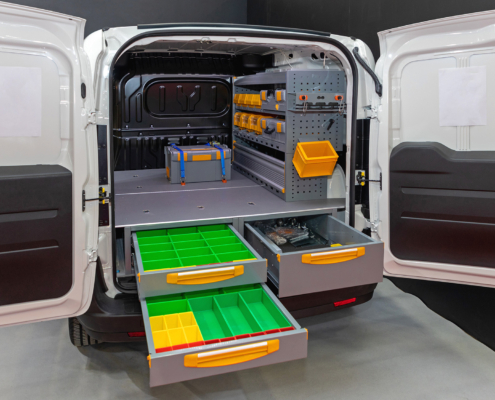
Repetitive motion and awkward lifting account for a surprising share of injuries. Adjustable shelving heights, slide‑out drawers, fold‑down work surfaces, and grab handles at each entry point prevent unnecessary twisting and climbing. Add steps or running boards for high‑roof vans so techs can enter and exit with better footing. Small changes add up to a measurable lift in HVAC van safety over the vehicle’s lifetime.
From recovery machines to cylinders, anything that can move should be secured. Specify recessed L‑track or E‑track with rated anchor points along the floor and walls. Use ratchet straps sized to the load, and label tie‑down locations so new hires know exactly where to secure equipment. A written strap‑inspection routine also helps satisfy service van safety compliance checks during internal or external audits.
There isn’t a single rulebook for every scenario, but the themes are consistent: secure cargo, maintain clear egress, and protect occupants. OSHA van safety standards for HVAC emphasize hazard controls—ventilation for chemicals, labeling for hazardous materials, and guarding moving parts.
For fleet policies, document how your upfit addresses these areas: bulkheads that block projectiles, ventilation ports for adhesives and refrigerants, and isolation of high‑voltage components when you run inverters or auxiliary batteries. Clear labels and color‑coded zones help technicians follow procedures at a glance, even on a busy day.
A jumbled cargo bay invites damage and downtime. Well‑designed drawers, lockable cabinets, and padded cases keep meters, laptops, and gauges safe. Add roof‑mounted tubes or interior pipe trays for long items so copper and PVC don’t bend or scar your flooring. Small parts stay in labeled bins with clear lids that prevent spills.
This is where secured tool storage for HVAC vans really pays off: less time searching, less breakage, and fewer emergency parts runs.
Mark every bin and drawer with a location code and include a laminated map near the side door. At the end of each call, techs quickly confirm tools are back in place. The habit takes seconds and multiplies uptime across the week. It also demonstrates service van safety compliance during spot checks, because inspectors can see at a glance that gear is stored and secured.
Water, snow, and job‑site mud create slippery conditions. Non‑slip composite flooring gives boots purchase and shields sheet metal from corrosion. Thermoformed wall liners absorb bumps from cylinders and gear, preventing sharp dents that lead to rust. Pair these with a tested bulkhead and cargo‑rated barriers so heavy items can’t intrude into the cab during hard braking. These upgrades deliver daily value for HVAC van safety while quietly extending vehicle life.
Want a second set of eyes on your setup? TNT Upfitters can walk through your current van, identify quick wins, and sketch a compliant layout that supports your workflows. You’ll leave with a prioritized checklist, timeline, and budget range you can act on immediately.
Poor lighting causes mistakes, slowdowns, and trip hazards. Bright LED strips under shelves illuminate bins without shadows, and task lights at the side and rear doors make early‑morning or after‑dark calls safer. Reflective decals and conspicuity tape outside the van improve visibility at the curb or on a shoulder.
If your teams respond after hours, these upgrades become part of your service van safety compliance story.
If you run inverters, chargers, or auxiliary batteries, treat the electrical system like a job site. Use marine‑grade wiring, fuse every circuit at the source, and isolate the battery system with clear labeling. Provide ventilation for enclosures and leave clearance around heat‑generating equipment. These practices support HVAC van safety and help avoid downtime from preventable electrical faults.
Midwest winters are rough on vans and the people who drive them. Rockford HVAC fleet safety solutions often start with corrosion‑resistant floors, sealed wall liners, and heavy‑duty door seals to block salt intrusion. Add heated mirror options, high-output defrosters for frozen‑morning starts, and exterior grab handles that remain usable with gloves. We also see strong demand for drop‑down ladder racks that reduce strain in icy parking lots.
Tailoring your upfit to local routes and weather patterns raises the everyday baseline for HVAC van safety without slowing your crews.
The best hardware still needs habits. Build a simple training deck for new technicians that covers tie‑down use, chemical storage, lockout/tagout for powered equipment, and three‑point contact for entry and exit. Place QR codes inside the door that link to short refresher videos and inspection checklists. Keep records of strap inspections, bulkhead installs, and lighting upgrades.
When an insurer or regulator reviews your fleet, that documentation shows your service van safety compliance is systematic, not ad hoc.
Safer vans reduce claim risk, help protect equipment, and lower unplanned downtime. Interiors last longer, managers spend fewer hours chasing repairs, and technicians feel taken care of. That morale boost tends to show up in customer reviews and repeat bookings. Over time, a culture that prioritizes HVAC van safety becomes a competitive edge in bidding and retention.
The right upfit turns a plain cargo van into a dependable, audit‑ready workspace. TNT Upfitters designs, builds, and installs solutions that advance HVAC van safety at every step: bulkheads, non‑slip floors, rated tie‑downs, ventilated chemical lockers, LED lighting, and reflective graphics. From OSHA van safety standards for HVAC planning to installation and documentation, our team handles the details so your technicians can focus on the job.
Ready to raise the bar? Talk with TNT Upfitters about a safety‑first build today, and put compliant, confidence‑building vans on the road.
 https://www.tntupfitters.com/wp-content/uploads/2024/06/Back-Doors-of-Van-Open-with-Shelving-and-Drawers.jpg
1250
2000
Abstrakt Marketing
/wp-content/uploads/2024/06/TNTUpfitters-Logo_Horizontal-Slogan-Dark.svg
Abstrakt Marketing2026-05-14 08:45:102026-05-14 08:45:12Avoid These 5 Common Fleet Upfitting Mistakes
https://www.tntupfitters.com/wp-content/uploads/2024/06/Back-Doors-of-Van-Open-with-Shelving-and-Drawers.jpg
1250
2000
Abstrakt Marketing
/wp-content/uploads/2024/06/TNTUpfitters-Logo_Horizontal-Slogan-Dark.svg
Abstrakt Marketing2026-05-14 08:45:102026-05-14 08:45:12Avoid These 5 Common Fleet Upfitting Mistakes https://www.tntupfitters.com/wp-content/uploads/2024/07/Blue-Pickup-Truck-with-Running-Boards-for-Front-and-Back-Sets.jpg
1250
2000
Abstrakt Marketing
/wp-content/uploads/2024/06/TNTUpfitters-Logo_Horizontal-Slogan-Dark.svg
Abstrakt Marketing2026-03-27 15:09:162026-05-13 11:14:14Top Questions Every Dealership Should Ask Before Partnering With a Vehicle Upfitting Company
https://www.tntupfitters.com/wp-content/uploads/2024/07/Blue-Pickup-Truck-with-Running-Boards-for-Front-and-Back-Sets.jpg
1250
2000
Abstrakt Marketing
/wp-content/uploads/2024/06/TNTUpfitters-Logo_Horizontal-Slogan-Dark.svg
Abstrakt Marketing2026-03-27 15:09:162026-05-13 11:14:14Top Questions Every Dealership Should Ask Before Partnering With a Vehicle Upfitting Company https://www.tntupfitters.com/wp-content/uploads/2024/06/Top-Shot-Wrapped-Van.jpg
1250
2000
Abstrakt Marketing
/wp-content/uploads/2024/06/TNTUpfitters-Logo_Horizontal-Slogan-Dark.svg
Abstrakt Marketing2026-03-10 11:52:592026-05-13 11:14:14Why Dealers Should Bundle Fleet Vehicle Upfitting into Fleet Purchase Packages
https://www.tntupfitters.com/wp-content/uploads/2024/06/Top-Shot-Wrapped-Van.jpg
1250
2000
Abstrakt Marketing
/wp-content/uploads/2024/06/TNTUpfitters-Logo_Horizontal-Slogan-Dark.svg
Abstrakt Marketing2026-03-10 11:52:592026-05-13 11:14:14Why Dealers Should Bundle Fleet Vehicle Upfitting into Fleet Purchase Packages https://www.tntupfitters.com/wp-content/uploads/2024/08/Mad-City-ProMaster-install.jpg
1250
2000
Abstrakt Marketing
/wp-content/uploads/2024/06/TNTUpfitters-Logo_Horizontal-Slogan-Dark.svg
Abstrakt Marketing2026-03-10 11:47:022026-05-13 11:14:15The Benefits of Partnering with Dedicated Vehicle Upfitting Companies for Fleet Orders
https://www.tntupfitters.com/wp-content/uploads/2024/08/Mad-City-ProMaster-install.jpg
1250
2000
Abstrakt Marketing
/wp-content/uploads/2024/06/TNTUpfitters-Logo_Horizontal-Slogan-Dark.svg
Abstrakt Marketing2026-03-10 11:47:022026-05-13 11:14:15The Benefits of Partnering with Dedicated Vehicle Upfitting Companies for Fleet Orders https://www.tntupfitters.com/wp-content/uploads/2024/06/Mounted-and-Movable-Sheliving-from-Inside-Van.jpg
1250
2000
Abstrakt Marketing
/wp-content/uploads/2024/06/TNTUpfitters-Logo_Horizontal-Slogan-Dark.svg
Abstrakt Marketing2026-02-12 13:59:382026-05-14 08:53:30Fleet Vehicle Upfitting Services and What to Look for in an Upfitting Partner
https://www.tntupfitters.com/wp-content/uploads/2024/06/Mounted-and-Movable-Sheliving-from-Inside-Van.jpg
1250
2000
Abstrakt Marketing
/wp-content/uploads/2024/06/TNTUpfitters-Logo_Horizontal-Slogan-Dark.svg
Abstrakt Marketing2026-02-12 13:59:382026-05-14 08:53:30Fleet Vehicle Upfitting Services and What to Look for in an Upfitting Partner https://www.tntupfitters.com/wp-content/uploads/2024/06/Fleet-of-White-Trucks-in-Parking-Lot.jpg
1250
2000
Abstrakt Marketing
/wp-content/uploads/2024/06/TNTUpfitters-Logo_Horizontal-Slogan-Dark.svg
Abstrakt Marketing2026-01-19 11:24:572026-05-13 11:14:16How Long Does Fleet Upfitting Take? A Realistic Timeline
https://www.tntupfitters.com/wp-content/uploads/2024/06/Fleet-of-White-Trucks-in-Parking-Lot.jpg
1250
2000
Abstrakt Marketing
/wp-content/uploads/2024/06/TNTUpfitters-Logo_Horizontal-Slogan-Dark.svg
Abstrakt Marketing2026-01-19 11:24:572026-05-13 11:14:16How Long Does Fleet Upfitting Take? A Realistic Timeline https://www.tntupfitters.com/wp-content/uploads/2024/06/Garage-Filled-with-Wrapped-Michigan-Kenworth-Vans.jpg
1250
2000
Abstrakt Marketing
/wp-content/uploads/2024/06/TNTUpfitters-Logo_Horizontal-Slogan-Dark.svg
Abstrakt Marketing2025-06-06 10:46:282026-05-13 11:14:19What Every Fleet Manager Should Know About Building a Fleet Upfitting Checklist
https://www.tntupfitters.com/wp-content/uploads/2024/06/Garage-Filled-with-Wrapped-Michigan-Kenworth-Vans.jpg
1250
2000
Abstrakt Marketing
/wp-content/uploads/2024/06/TNTUpfitters-Logo_Horizontal-Slogan-Dark.svg
Abstrakt Marketing2025-06-06 10:46:282026-05-13 11:14:19What Every Fleet Manager Should Know About Building a Fleet Upfitting Checklist 



 HVAC Van Productivity in Rockford