Keep it simple. Set your in-service date, work backward, and pressure-test the few variables that matter most before you commit.
Vehicle availability. Timelines start with the units themselves. If you already own the vehicles, staging can begin quickly. If you are sourcing new units, transit, titling, and dealer prep can add days or weeks, especially during peak seasons.
Upfit complexity. Simple shelving and partitions move fast. Custom electrical, scene lighting, telematics, power systems, and heavy fabrication add steps that lengthen shop time. The more specialized the spec, the more calendar you should budget.
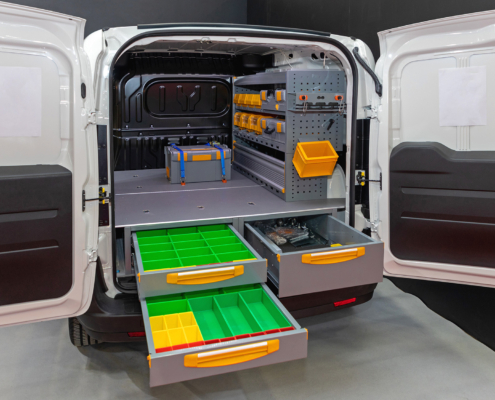
Parts and equipment lead times. Drawer systems, ladder racks, lighting, inverters, and trade packages often carry vendor lead times. Locking choices early allows parts to arrive before your build slot—critical for keeping fleet upfitting on schedule.
Coordination with OEMs and dealers. Paperwork, pre-delivery inspection, and transport must align with your shop window. When those handoffs slip, vehicles sit idle.
Industry-specific needs. Police, utilities, construction, telecom, and field service fleets may require certifications, inspections, or specialty gear. Those requirements influence both the sequence and duration of commercial vehicle upfits.
Get these inputs on the table up front and your dates stop being guesses.